
I was recently fussing about the apparent intent of Microsoft to torpedo Windows 10 users to force them to upgrade to Windows 11 which, in most cases, means the cost of buying a new computer. A friend responded with the simple comment, “Planned Obsolescence.” That is a term that has been in our lexicon for as long as I can remember and is generally taken as derogatory and spoken with a sneer. However, it can sometimes be put in a better light. I spent my career in the microelectronics industry unashamedly planning and executing obsolescence, and we are all better off for it. The entire industry planned on a 4-fold increase in microcircuit function density every 3 years. We didn’t know how it would be achieved until we had expended a lot of intellectual capital on research and invention. That’s what we did to make a living. There was nothing nefarious about it. Mankind was better off as a result. We all got more productive function for our money. The older products still worked as well as ever but newer was better.
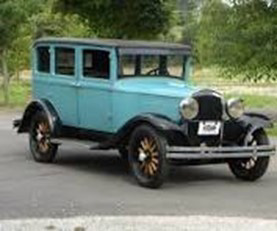
In the automotive industry, the same arguments should be obvious to us automotive history buffs. With proper maintenance, my 1929 Plymouths still perform as well as they did when new. What makes our hobby so interesting is the remarkable differences between our antique cars and modern ones.
Consider all the features we can take for granted on your modern cars that aren’t on my 1929 Plymouth. In 1893, Margaret Wilcox came up with the idea of using engine heat to warm the passenger compartment of a car, but it didn’t see wide use until the ‘30s. Mary Anderson patented the windshield wiper in 1902 and founded a company, ANCO, to manufacture them. It wasn’t until the ‘40s that they were standard on all vehicles. My first car with electric wipers was my ’61 Chevy. It sure was great having them work even when going uphill. Power brakes were introduced in the ‘20s but, along with power steering, weren’t widely offered until the ‘50s.
The Hydra-Matic automatic transmission was introduced by Oldsmobile in 1940. Automatic transmissions have grown in prevalence ever since, while the manual transmission was widely referred to as “standard.” I remember my father saying in 1954, “I can do a hell of a lot of shifting for 150 bucks.” As teenage drivers, we referred to automatics as “slush pumps.” I’m pleased to say I’ve never owned one.
Turn signals, which are now ubiquitous, were first offered as an option by Buick in 1939. That’s a good thing because I’d need an open window to use hand signals and they are likely closed because I now have air conditioning.
These are all inventions that have, for the most part, made life better and the market responds favorably to them. They were all, more or less, planned and they did make the old road iron seem obsolete, but it still worked as well as it ever did. Sit back and enjoy the ride because life is going to keep getting easier because of planned obsolescence.
There are a few newer features I’d be happier without. I’d like to have doors that lock when I want them to and not when I don’t. I don’t recall ever thinking, “Gosh! I wish my lights were flashing and my horn was blowing.” My key fob has a red button that does just that and I’d like to pull it out by the roots. I don’t know why it took so long to come up with cup holders so that you don’t need to hold your beer can in your hand while driving, but they finally did so. Now I’m waiting for manufacturers to devise a smartphone holder. Fortunately, there is an aftermarket one you can get to go in your recently introduced cup holder.
Leave a Reply