

Manufacturing the things and stuff needed for everyday life was once the job of artisans who used tools and skill to make things one at a time. This started to change abruptly in mid-18th Century Great Britain, kicking off what has come to be called the Industrial Revolution. It started in the textile industry with the invention of the spinning jenny and the power from which mechanized the weaving of cloth. Revolutions don’t occur without some opposing resistance.
By 1811, this resistance was personified by the Luddites. They adopted this name after a fictitious “Ned Ludd” who was depicted as smashing automatic knitting machines. Groups of them actually did raid factories and smash machines in protest of the loss of skilled jobs to low skilled workers who could run the machines. As we know, society adapted and improved with cheaper and more plentiful textiles. Other technical advancements such as steam power and electricity pushed the revolution along to the ultimate benefit of all.
Another significant advancement was driven by Henry Ford’s introduction of the moving assembly line for the Model T Ford in 1914. Prior to that, cars were assembled one at a time in stationary bays. Interchangeable parts were also introduced. Jobs were not lost as a result. Instead, Ford workers’ pay was doubled from $2.30/day to an unheard of $5.00/day and the work day was reduced from 9 hours to 8 hours. The Model T was priced at $825 in 1913, but the price dropped steadily to $300 by 1925. By 1927, 15 million Model Ts had been produced. Ordinary folks who could not have previously imagined owning a car could now put the horse out to pasture and drive their very own car.
Since then, technical advancements have continued to make manufacturing of all products more efficient and productive. Computer-aided design, computer-controlled machining and robots are now in everyday use without any resultant negative impact on employment.
Today we are exposed to almost daily news media alarms about the specter of AI eliminating jobs. Yes, there have been job losses in the past due to technical advances. The ice man, the milkman, the lamp lighter, and the chimney sweep have all moved on to other jobs and are probably happier for it. As a thought experiment, consider the jobs you see people around you doing every day. Can you imagine how any of them might be lost to AI? I can’t. Even reflecting back on my own career in a highly technical area, I can’t imagine how AI would have impacted it other than to help me do it better. AI is a tool to be used to our advantage.
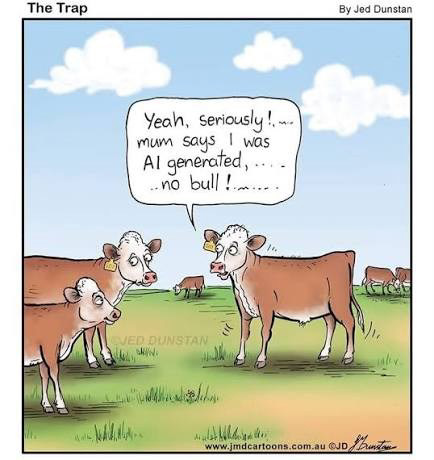
After all, what’s the big deal with AI? Any farm boy knows it’s been around for many decades. Artificial Insemination, right? Well, that did leave a lot of bulls out of a job.
Leave a Reply