

Modern vehicles have all kinds of “driver aids” that are intended to make it easier and/or safer to drive. Some of these seem more annoying than helpful – doors that lock automatically fall in this category for me. Others, however, are truly great advancements – like the subject of this article. I suspect everyone reading this has had at least one experience where antilock brakes (ABS) have saved them from an accident – but how do they work?
Antilock brake systems have evolved over time, but they all have the same basic components:
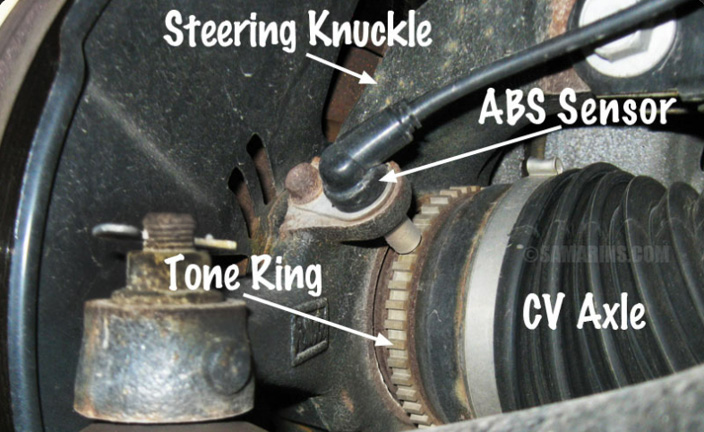
- Wheel speed sensors: Usually this consists of a “tone ring” or “tone wheel” and a magnetic pick-up that sends a pulse every time a tooth on the tone wheel passes in front of it. Faster pulses mean the wheel is turning faster.
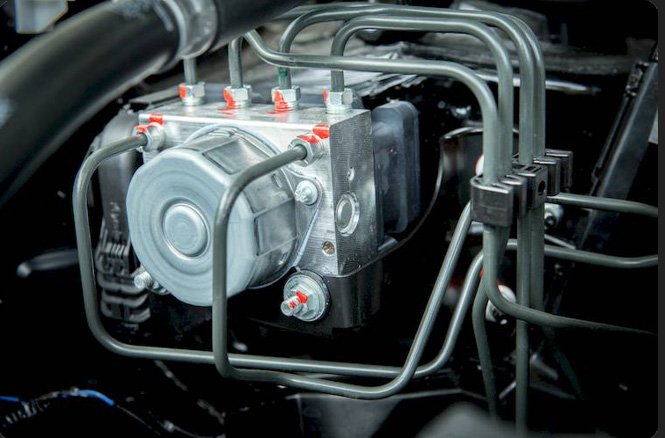
- Pressure pump/accumulator: This provides pressurized brake fluid so that the brakes can be pulsed on and off.
- Valving to apply/release brakes: Often this is integral to the pump assembly.
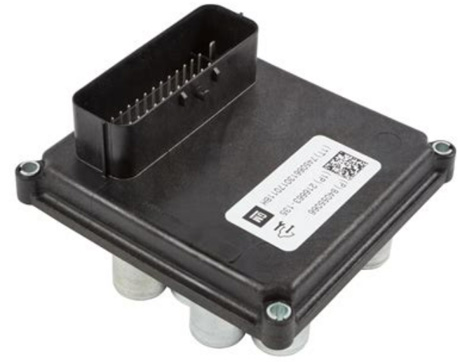
- Control system: The computer that controls it all.
The first vehicle I had with antilock brakes was a 1990 Ford Ranger. The was a pretty good example of one of the simplest systems. It was what is called a “single channel” system, meaning that it only had one sensor and only applied to the rear axle. The single sensor, in this case, was actually looking at the speed of the differential carrier rather than directly at one of the wheels. Anyone who has driven an unloaded pickup without ABS in slippery conditions knows just preventing the rear brakes from locking up was a great advancement. I can recall at least one occasion coming down a slippery hill to a T-intersection in that truck where the ABS kicked in. There’s no amount of pumping the brakes manually that would have kept me from sailing right through that intersection.
The basics of how it works is that a computer takes wheel speed signals and looks for either sudden drops in speed that aren’t physically possible (without having locked up) and/or large differences from wheel to wheel. When it does see something, it will release and reapply pressure to the brakes to maintain speed decreases that it thinks are physically possible.
The next step up is a 3-channel system, where you are looking at the rear axle (like on my Ranger) and both front wheels. My research tells me the first OEM to offer this was Chrysler back in 1971. The idea didn’t catch on right away, but they did blaze the path.
Most new vehicles now come standard with full 4-channel systems where they have sensors at all four wheels and they can very precisely monitor and control the brakes. Skidding to a stop is basically a thing of the past now.
Valving to apply/release brakes: Often this is integral to the pump assembly.
Having all these sensors led to the next big safety innovation: Stability control. That requires a couple more sensors, more explanation, and probably warrants an article of its own. More to come!
Leave a Reply