
Among the names on the long list of people I had never heard of was Jim Moylan. From what I have read recently, he was well known in certain circles. He invented the Moylan Arrow, which I also had not heard of. While working for Ford in the ‘80s, he had the same experience most of us probably have had.
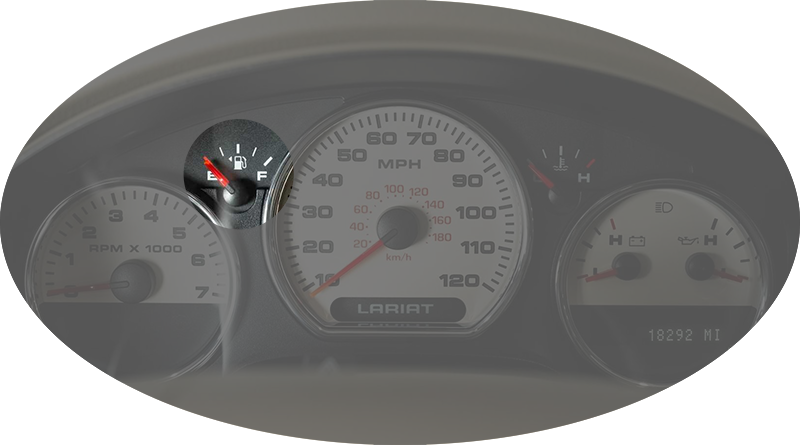
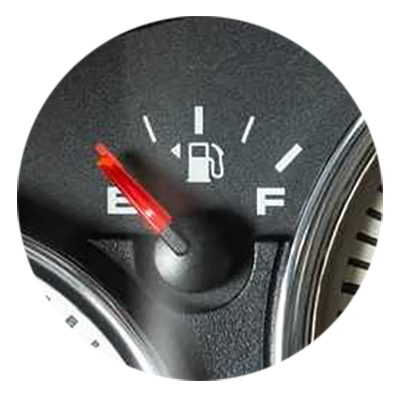
If you have had the occasion to rent a car and gotten to the point that you need to fill the gas tank, you know the frustration of wondering which side the filler cap is on before pulling up to the pump. Moylan’s idea was that this bit of angst would be eliminated if there was an illuminated arrow on the face of the fuel gauge pointing left or right to indicate which side of the car the filler cap is on. He promptly sent a memo to his upper management suggesting the feature be incorporated in future vehicles.
They responded favorably and added this feature to their line of vehicles. I recall that when I worked at a filling station as a teenager, the frustration was even worse. I quickly had to learn that on some cars, the filler cap wasn’t on either side. On ’54 Fords, it was to be found on the rear behind the flip-down license plate. On ’56 Chevys, you got to it by twisting a piece of the chrome trim on the left taillight which flipped down the light assembly to reveal the filler cap. I guess we all considered that to
be a fun game of hide-and-seek.
My reaction to Moylan’s experience would have been different. Why not just standardize the filler cap location? My vote would be for locating it on the driver’s side. The driver is most likely the one who’s going to pump the gas. As he drives up to the pump, he can easily see how close he is to the pump and wouldn’t need to walk around the car to get to it. I don’t expect to be recognized for this great idea, and there’s no feature of the car that could be named for me to make me famous.
My experience has been that, from the late ‘30s up to the ‘80s, you could hop into the driver’s seat of any domestic car and, regardless of the make, find all the necessary controls in the same place. The gear shift lever was usually on the steering column with the standard “H” pattern for a manual transmission. The foot pedal positions were standardized, including a clutch and The heater/defroster and optional AM radio were prominently located in the center of the dashboard with obvious control knobs.
Those simple days are over. The heater has been replaced by a climate control with ten little buttons with odd hieroglyphics and two knobs. The radio has been replaced by an entertainment center with one knob and a “distraction” touch screen to help keep your eyes off the road. The screen on mine frequently flashes up an attention-grabbing message telling me to keep my eyes on the road. That last bit says it all.
Leave a Reply